Coconut Market Report 27.05.26
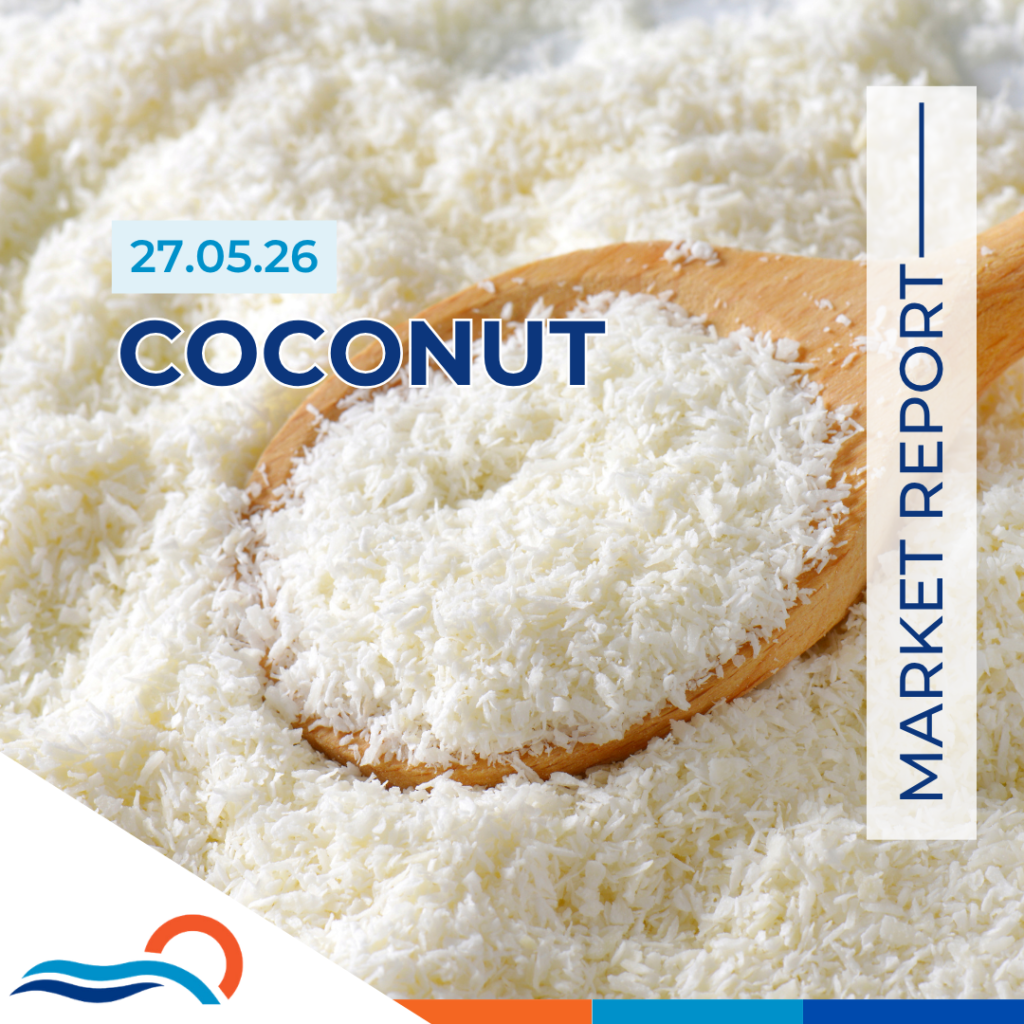
Desiccated coconut prices have stabilised following a softer phase, with earlier sluggish demand and elevated inventories now largely absorbed by the market. Buyer participation is gradually returning, while spot availability is tightening. Indonesia and Sri Lanka continue to support near-term shipments, whereas the Philippines appears increasingly oriented toward later delivery positions. This dynamic suggests the market is not currently facing an outright shortage, but is becoming more sensitive to movements in raw nut supply, weather developments, and forward demand.
A key transition on the horizon is the upcoming lean season, expected to run from Q3 2027 through year-end. During this period, the coconut supply typically tightens progressively. This year, and into Q1 2027, the lean season will coincide with strengthening demand from Europe, the Middle East, and North America, as buyers who previously destocked begin to rebuild inventories ahead of the Christmas and Ramadan cycles.
Weather remains a critical medium-term risk. Current conditions in the Philippines point to persistent heat, high humidity, intermittent rainfall, elevated heat index levels, and the potential for tropical activity. While these factors do not necessarily translate into immediate supply disruptions, they introduce increasing uncertainty around crop development, logistics, drying efficiency, and raw nut movement.
The broader concern centres on the cumulative impact of heat stress, dryness, erratic rainfall patterns, and storm activity. Although coconut palms are inherently resilient, prolonged stress during key stages of nut development can weigh on yields in subsequent periods.
Against this backdrop, buyers should avoid remaining under-covered for Q3 and Q4, where demand is already committed. The market is not in a state of panic; however, the underlying tone is clearly firming. Spot availability is tightening, seasonal demand is approaching, weather-related risks are building, and freight conditions are becoming increasingly constrained – collectively reinforcing a more constructive outlook.
Via The Agri Pulse