Macadamia Outlook 16.07.26
Improving Crop Outlook, But Premium Kernel Quality Remains the Key Market Question
The global macadamia crop outlook is showing signs of improvement, yet the quality picture remains far less certain. While larger harvest expectations are supporting a more positive supply outlook, the market’s focus is increasingly shifting from headline production volumes to the availability of premium-grade kernels.
In South Africa, persistent heavy rainfall across several major producing regions continues to create operational challenges during harvest and post-harvest handling. Wet conditions can affect drying, storage, processing efficiency and ultimately kernel quality, increasing the risk of variability between shipments. These weather concerns should be viewed as a quality risk factor rather than evidence of widespread crop failure, but they do reinforce the need for close monitoring as the season progresses.
Australia has started from a more favourable position, with healthy early nut development and generally positive growing conditions. Nevertheless, the industry’s final production and quality outcomes remain heavily dependent on weather conditions through the balance of the growing season and harvest period. Early crop potential does not automatically translate into premium kernel recovery, and quality indicators will only become clearer as harvesting and processing advance.
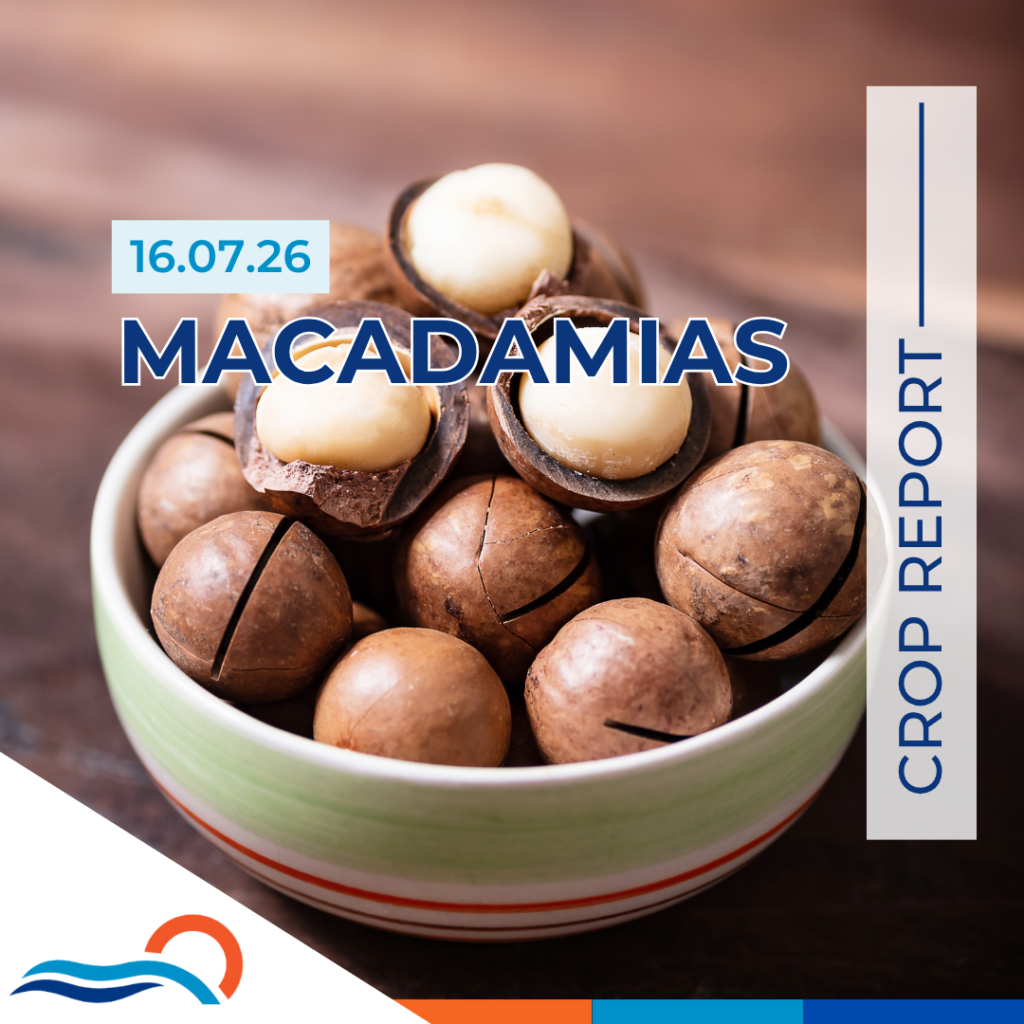
The important commercial distinction for buyers is that higher NIS (Nut-in-Shell) production does not automatically result in a proportional increase in premium whole kernel availability. A larger crop may improve overall market supply and ease some availability pressures, but the production of high-quality whole kernels depends on factors such as harvest conditions, kernel recovery rates, colour, appearance, defect levels and processing performance. Consequently, supplies of premium whole grades could remain relatively tight even if total market volumes increase significantly.
Buyers View
For procurement teams and processors, it is therefore essential to separate volume coverage from specification coverage. Greater raw material availability may support general supply requirements, but the proportion of production capable of meeting demanding customer specifications remains uncertain. This is particularly relevant for applications requiring:
- Whole kernel grades
- Premium appearance standards
- Low defect tolerances
- Consistent colour and size profiles
- Strict processing specifications
Market participants should also avoid viewing either South Africa or Australia as single, uniform supply origins. Quality outcomes can vary considerably between growing regions, processors, orchards and individual shipments. As a result, both opportunities and risks are likely to emerge unevenly across the supply chain rather than being reflected in national crop estimates alone.
For buyers with specification-sensitive programmes, improving crop forecasts should not be interpreted as a guarantee of abundant premium product availability. The more important commercial question is not simply how much macadamia product will enter the market, but how much will consistently meet required grade standards while remaining within acceptable quality, claims and rejection parameters.
Until greater clarity emerges on final kernel recovery rates and grade distribution, the premium segment of the macadamia market is likely to remain quality-driven rather than volume-driven. As a result, procurement strategies should continue to focus on securing reliable specification coverage, not merely overall supply coverage.