Almond Crop Progress Report 30.04.26
April Weather and Orchard Conditions in California’s Central Valley
April delivered highly variable weather across California’s Central Valley, with periods of near summer‑like warmth alternating with strong spring storms. During the warmest stretches, daily high temperatures reached 80°F, especially in the Southern San Joaquin Valley. In contrast, the passage of two significant storm systems suppressed daytime highs to the low 60s°F for several consecutive days in the almond orchards.
Heavy Rainfall, Hail, and Wind Damage in the San Joaquin Valley
The most significant impact of April weather was storm-related precipitation and hail damage. While some areas of the southern San Joaquin Valley received only 0.25 to 0.5 inches of rain, much of the Central Valley recorded 3 to 4 inches for the month. A large portion of this rainfall occurred in a short window around April 21, increasing runoff and field impact.
A particularly intense thunderstorm near Ripon in San Joaquin County produced large hail, causing severe damage in multiple almond orchards. In several locations, the majority of the almond crop on trees was affected, with additional losses expected as hail-damaged nuts drop in the coming weeks. Strong winds accompanying the storm also uprooted or toppled numerous trees in the hardest-hit orchards. Hail was reported elsewhere in the valley as well, though with less extensive damage.
Disease Risk Increases Following Spring Storms
The April storms marked a sharp contrast to the dry, warm conditions experienced in March. While cooler temperatures and rainfall temporarily reduced irrigation demand, the wet conditions increased the risk of fungal diseases in developing nuts and foliage.
Of particular concern is red leaf blotch, an invasive fungal disease that has spread rapidly across much of the Central Valley over the past two years. The recent rainfall has heightened disease pressure, increasing the potential for severe defoliation if infections are not effectively managed.
Rising Plant Bug Pressure Across Central Valley Orchards
Growers and Pest Control Advisers (PCAs) throughout the Central Valley are reporting increasing populations of plant bugs, including leaf-footed plant bugs, stink bugs, and boxelder bugs. These pests have become a growing challenge in recent seasons and continue to threaten crop quality.
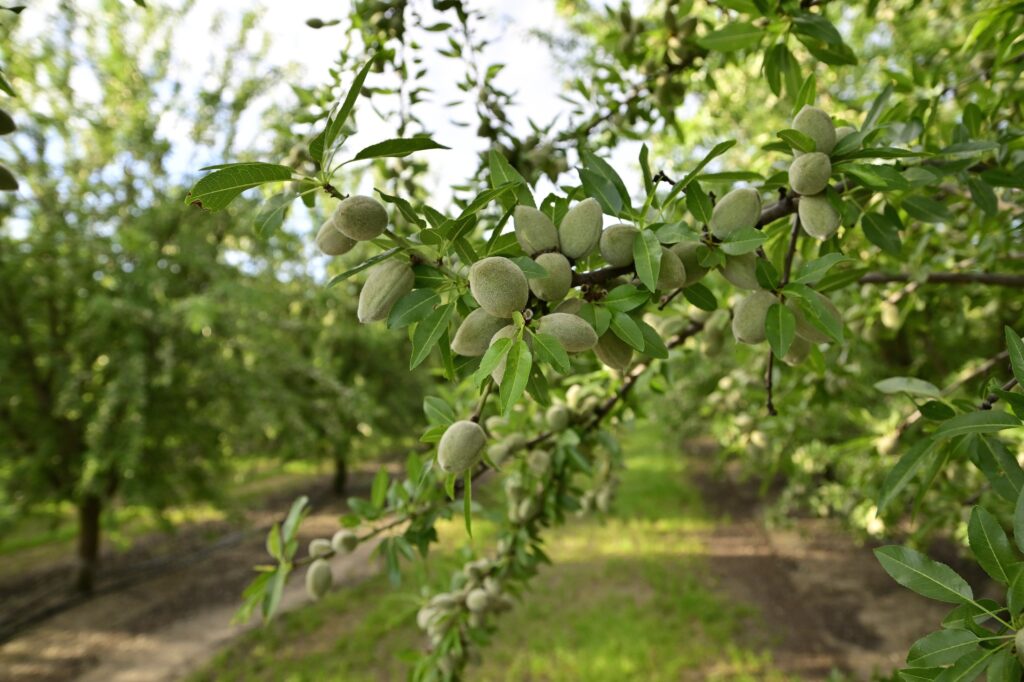
In orchards where mummy nuts remain in almond trees, PCAs are recommending pest control materials effective against both plant bugs and navel orangeworm larvae to reduce compounded pest pressure.
Fertility and Irrigation Challenges Following April Rainfall
Although rainfall reduced the immediate need for irrigation, it also complicated efforts to deliver nutrients to developing crops. Injecting liquid
fertiliser through irrigation systems remains the most efficient method for nutrient delivery. However, growers in areas receiving heavier rainfall have been hesitant to apply additional water due to concerns about root disease.
Some growers are delaying fertigation until drier weather and rising temperatures are forecast. In contrast, others, particularly in lower‑rainfall areas, have opted to operate irrigation systems only long enough to meet fertiliser requirements while minimising excess moisture.
Rising Input Costs and Grower Decision-Making
At the same time, Central Valley growers are closely monitoring rapidly increasing production costs. Fertiliser prices have risen sharply, placing additional strain on budgets and complicating nutrient management decisions. Crop protection materials, along with fuel costs, have also increased, making each pest and disease management decision more financially significant.
As a result, growers are critically evaluating the cost versus potential return of every operation. Despite these challenges, overall grower sentiment regarding 2026 crop potential remains generally consistent with 2025 production levels.