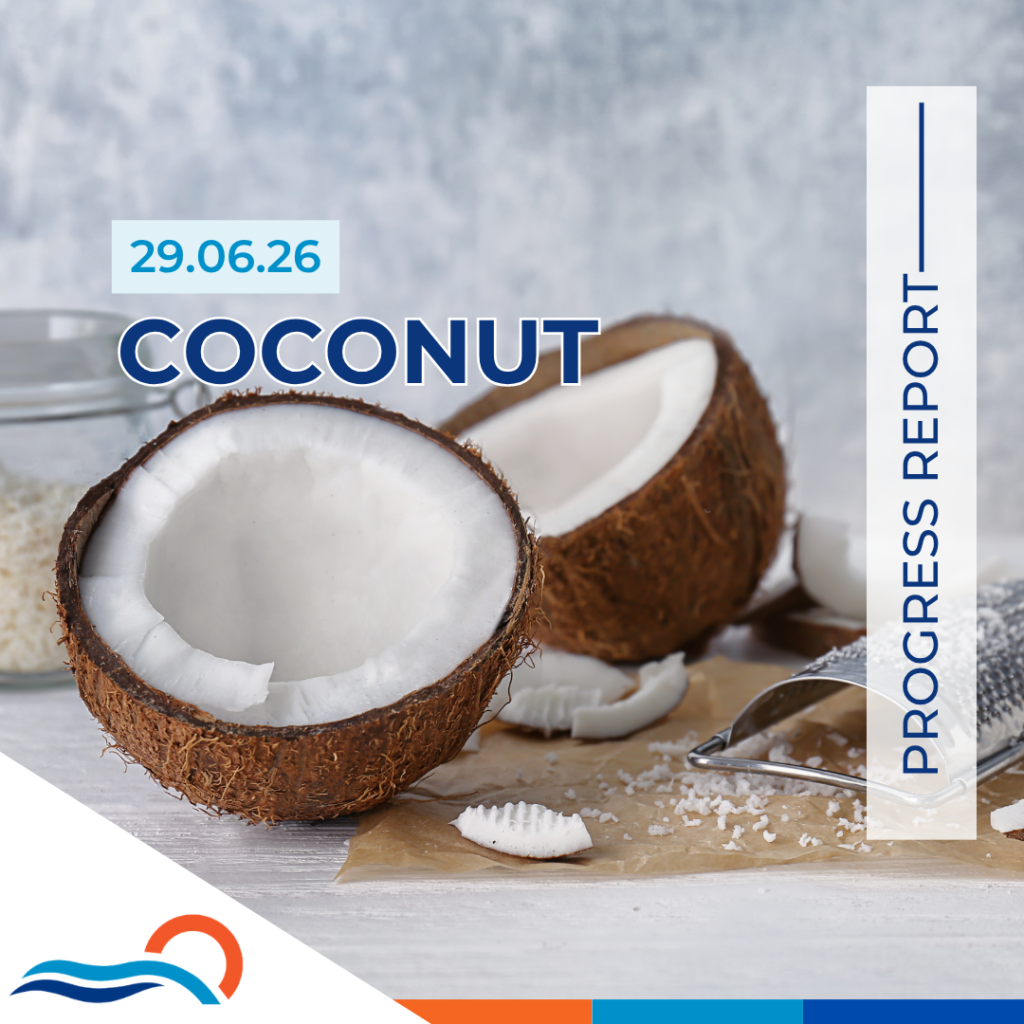
Coconut Market Overview 29.06.26
The coconut oil market is currently experiencing a period of relative stability. In the near term, prices are generally under pressure, driven by improved short-term supply, cautious purchasing behaviour, and reduced concern surrounding energy markets. While present conditions appear steady, several emerging factors indicate that the outlook for the second half of the year may become increasingly supportive for coconut-based products.
Key influences such as weather-related risks, expanding biofuel demand, geopolitical developments, freight rate volatility, and seasonal declines in production are all expected to play a more significant role as the year progresses. Although demand is steady rather than aggressive at this stage, the overall balance of risk suggests the potential for firmer market conditions in the months ahead.
Desiccated Coconut
The desiccated coconut market remains broadly balanced at present. Major consuming regions, including Europe and North America, continue to hold sufficient spot inventories, enabling buyers to meet their immediate requirements without urgency.
However, these inventory levels cannot be considered excessive. Fine Grade supply remains relatively stable, while Medium Grade availability is noticeably tighter. As a result, Medium Grade is currently commanding a premium over Fine Grade across many markets. Demand remains steady but somewhat subdued, in part due to seasonal holiday periods affecting purchasing activity in key regions.
From mid-July onwards, market activity is expected to increase as buyers return to secure coverage for Q3 and Q4. Historically, this period represents peak demand for coconut products, particularly within food manufacturing sectors such as confectionery, bakery, and seasonal product lines.
Importantly, this anticipated rise in demand coincides with the onset of the lower crop season in the Philippines, when raw material availability typically begins to decline. The ongoing El Niño cycle may further tighten supply conditions as the market progresses into Q4.
Weather
The Philippines is currently experiencing El Niño conditions, with forecasts suggesting the possibility of a prolonged and potentially severe event extending into 2027. Reduced rainfall, elevated temperatures, and extended dry periods may impact coconut flowering, nut development, and overall production potential.
At the same time, the Philippine typhoon season begins in July. While El Niño years often result in fewer tropical storms, those that do occur can be more intense. Any significant storm activity affecting coconut-growing regions could disrupt infrastructure, even if direct crop damage is limited. Transport networks, processing facilities, ports, and shipment schedules may all be impacted, creating further supply uncertainty.
Summary
Current market conditions remain relatively comfortable, with near-term supply adequate to meet existing demand. However, the forward outlook is becoming increasingly constructive.
A combination of El Niño-related weather risks, seasonal production declines, freight volatility, and geopolitical uncertainty has the potential to tighten supply and support firmer pricing as the year progresses. Demand is expected to strengthen from mid-July onwards, as buyers begin securing coverage for Q3 and Q4 requirements—coinciding with the lower crop season and heightened weather-related risks.
In light of these developments, buyers are advised to take a proactive approach to procurement. Securing at least a portion of forward requirements sooner rather than later may help mitigate exposure to potential supply disruptions and rising replacement costs. While there is no immediate indication of a supply shortage, prudent forward planning is recommended given the range of factors that could influence the coconut market in the second half of the year.