Turkish Vine Fruit Market Update 12.10.26
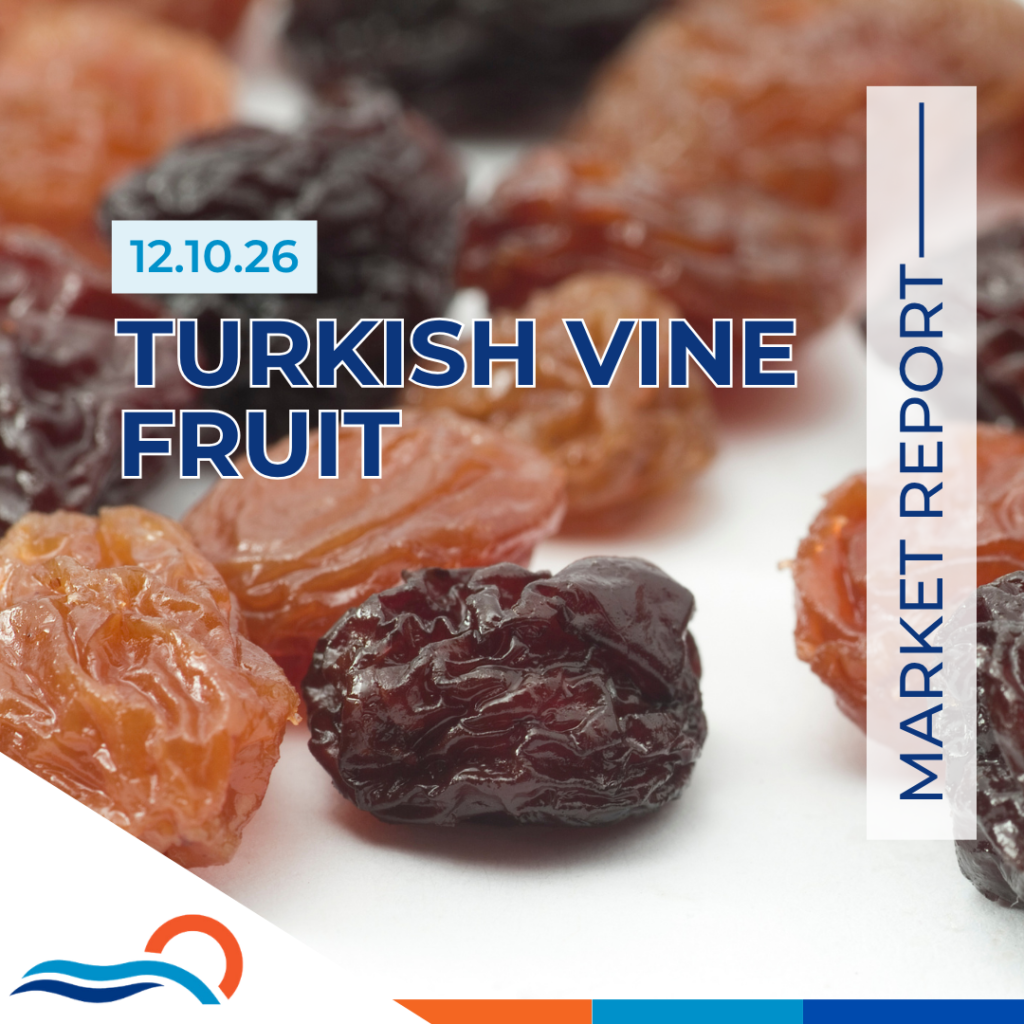
Stronger Exports, Lower Prices and a More Stable Outlook for 2026
The Turkish vine fruit market has entered the 2026/27 season with a combination of significantly stronger export volumes, lower pricing, and improved market stability. For UK food manufacturers, bakery producers, cereal brands and wholesale buyers, the latest developments present both purchasing opportunities and important factors to monitor over the coming months.
Exports have started strongly, while intervention from Türkiye’s Grain Board (TMO) has helped establish a clearer pricing floor for growers and processors.
Turkish Sultana and Raisin Exports Surge
Early export figures highlight a much more active start to the new season compared with last year. As of the final week of September 2026, exports of the new Turkish raisin crop reached 17.3 thousand metric tonnes, representing a 50.4% increase year-on-year. At the same time, average export prices fell by 29.0%, creating a more competitive environment for international buyers.
The UK’s position as the leading destination for Turkish raisins remains unchanged. The UK imported approximately 4,000 metric tonnes, making it the largest export market ahead of Italy, the Netherlands, Germany and Spain. Export volumes to the UK increased by 31% compared with the same period last season.
For UK food manufacturers and ingredient buyers, the combination of greater availability and lower prices has improved sourcing opportunities at the start of the season.
TMO Intervention Brings Stability to the Raisin Market
One of the most significant developments this season has been the announcement of TMO’s 2026 crop purchasing programme.
TMO established purchase prices of:
- TL 85/kg for Type 7 Sultanas
- TL 90/kg for Type 8 Sultanas
- TL 95/kg for Type 9 Sultanas
- TL 100/kg for Type 10 Sultanas
These prices did not immediately lift free-market values, but they created a clearer support mechanism and significantly reduced downward market pressure during the harvest period. Growers now have an alternative sales channel, strengthening their negotiating position and reducing the likelihood of further sharp price declines.
As TMO purchases additional raw material, the volume available to the free market is expected to decrease. Should export demand remain strong, this could eventually support firmer market pricing later in the season.
Harvest Progress and Crop Quality
Harvesting across the key Manisa growing region progressed throughout September and was largely completed during the second half of the month. Higher bunch loads resulted in slower sugar development and slightly later maturation than in previous seasons. Growers who delayed harvesting generally achieved better maturity and sugar accumulation.
Drying operations were also largely completed before light rainfall arrived during the final week of September. While the rain increased humidity and presented some risk to uncollected fruit, most of the crop had already been harvested and dried, limiting the overall impact.
As more product moves through grading and processing facilities, buyers will gain a clearer picture of:
- Berry size profiles
- Moisture content
- Finished quality distribution
- Processing performance
- Grade availability
The report notes that while overall production has recovered strongly, availability will vary between individual grades and specifications. Premium quality material may therefore continue to attract price premiums despite the larger crop.
Supply Outlook Remains Positive
Industry estimates presented earlier this year suggested a Turkish raisin crop of approximately 290,000 metric tonnes, with carry-over stocks bringing potential total supply close to 300,000 metric tonnes. Field observations continue to support expectations of a substantial recovery following several years of reduced production.
Rather than representing an exceptionally large harvest, this would mark a return to more normal production levels for Türkiye’s vine fruit sector.
What This Means for UK Buyers
For businesses purchasing Turkish sultanas, raisins and currants, the current market offers a favourable buying environment compared with previous seasons. Strong crop recovery, increased export activity and lower prices have improved supply availability, while TMO intervention has introduced greater price stability.
However, several factors remain important to monitor:
- TMO purchasing volumes
- Export demand growth
- Grower selling behaviour
- Quality distribution across grades
- Exchange rate movements
- Competition from alternative origins
These variables will play a key role in determining market direction during the remainder of the 2026/27 season.