Vine Fruit Market Report 26.02.26
Price Levels and Market
In February, market activity showed a modest improvement compared to January; however, overall trading volumes remain below seasonal averages. After a slow start to the year, both growers and exporters continue to act cautiously, while buyers maintain a selective and need-based purchasing approach. BIOFACH has brought renewed visibility to the market, particularly within the organic segment, generating fresh enquiries and forward-looking discussions. Nevertheless, the fair has not yet led to a significant increase in confirmed volumes. Buyers remain strongly focused on price competitiveness and supply security.
Raw material availability is relatively tight in certain quality grades, particularly in the organic segment, which supports firm price levels. However, prevailing demand conditions are limiting the potential for a more significant price increase. In the conventional segment, exporter competition combined with cautious buyer behaviour is keeping the market broadly balanced. The demand from Europe has shown slight signs of recovery following the holiday period. Although purchasing continues largely on a hand-to-mouth basis. Exchange rate volatility and high financing costs remain key considerations for exporters. While shipment volumes have edged up compared to January, overall market sentiment can still be characterised as cautious.
From the vineyards
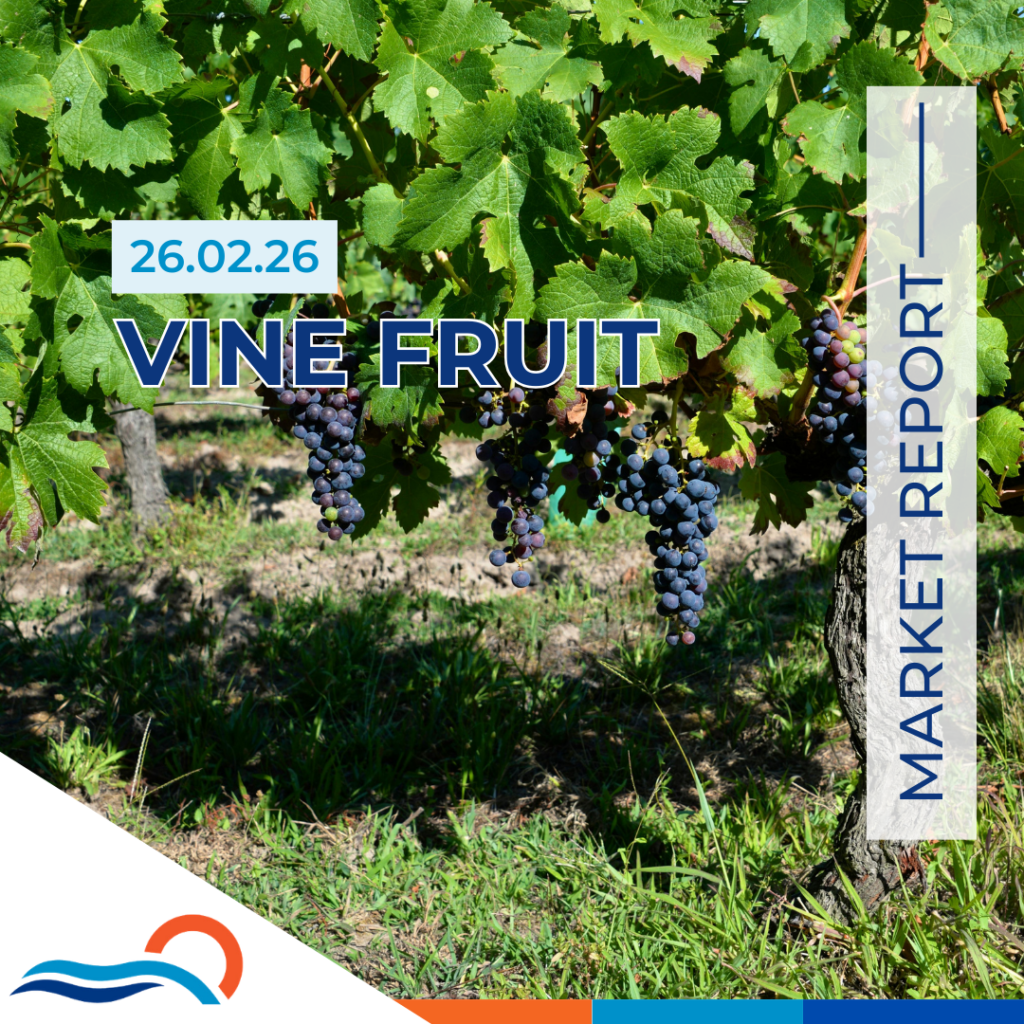
As of February, pruning and subsequent tying operations in the vineyards have been largely completed. Parcels have been prepared for the upcoming vegetative season. February rainfall has brought the soil profile to an adequate moisture level, creating favourable conditions for root development and the initiation of the spring growth cycle. However, in certain low-lying and bottomland areas, heavy precipitation has resulted in temporary water accumulation, with standing water persisting in some parcels for an extended period.
From a phenological standpoint, no bud break has been observed to date, and the vines remain in their dormancy phase. Given the continued low temperatures, bud break is expected to commence in March. With the anticipated rise in temperatures, preventive measures against potential late spring frosts will be critical, particularly in bottomlands and cold air pockets. It is advisable to ensure that irrigation systems for frost protection are fully operational, meteorological data is closely monitored, and all relevant equipment is checked and ready for use.